
Why Beautiful Prototypes Die in Manufacturing
A beautiful prototype proves that an idea can work. A successful product proves that it can be manufactured, scaled, and sold. This article explores why Design for Manufacturing should be considered from day one, and how engineering, assembly, tolerances, and supply chain decisions ultimately determine whether innovation reaches the market.
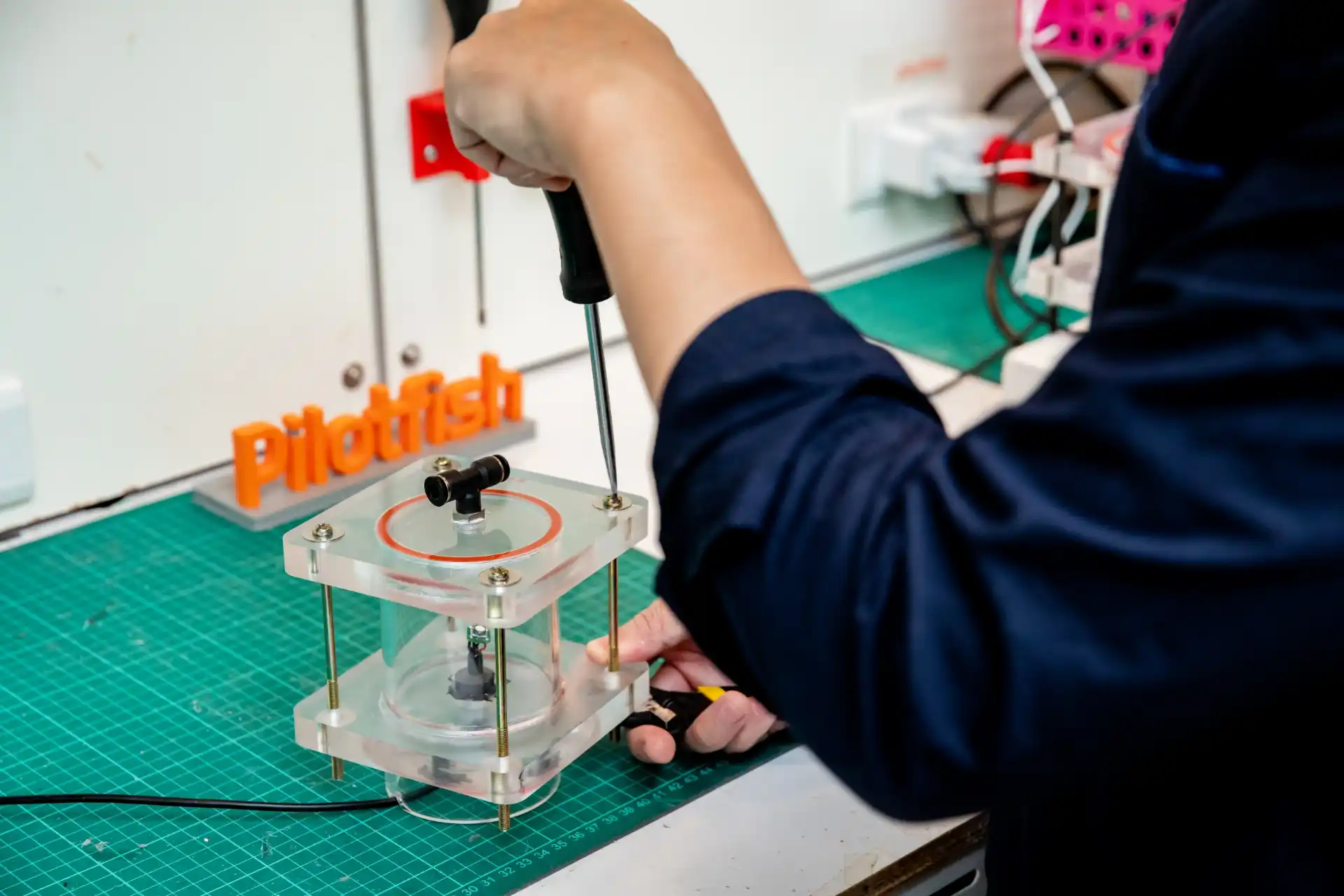
Article hightlights
- Most products don't fail because the idea is weak. They fail because manufacturing realities arrive too late.
- A prototype proves that something can be built. Manufacturing proves that it deserves to exist.
- Design for Manufacturing (DFM) reduces cost, risk, delays, and redesign.
- Injection molding, tolerance stack-up, and assembly planning should influence design decisions from the beginning.
- Supply chain resilience is now part of product design.
- The most expensive engineering change is the one made after tooling or production has started.
- Successful product development requires strategy, design, engineering, and manufacturing to work together.
Why Beautiful Prototypes Die in Manufacturing
Or: the moment when industrial design meets reality.
Opening
Everyone loves prototypes.
They photograph well. They impress investors. They make strategy tangible and innovation visible.
For a brief moment, everyone believes the hardest part is over.
In reality, the hardest questions often haven't been asked yet.
Can it be assembled hundreds of times a day by real people?
Can it survive manufacturing tolerances?
Can it be repaired?
Can suppliers consistently deliver its components?
Can it be produced for a price the market will actually pay?
Many products don't fail because they don't work.
They fail because they can't be manufactured economically, reliably, or repeatedly.
And that's where Design for Manufacturing begins.
The Prototype Illusion
A prototype only has one job: to demonstrate possibility.
Manufacturing has a completely different mission: to deliver consistency.
Building one perfect device is an achievement.
Building 100,000 identical ones is engineering.
That's why many teams celebrate too early.
The prototype answers:
"Can we build this?"
Manufacturing asks:
"Can we build this every day without losing money?"
Every Extra Screw Is a Business Decision
People often think manufacturing optimization is about saving pennies.
It's not.
One additional fastener can mean:
- another assembly step
- another quality inspection
- another supplier
- another opportunity for human error
- another second added to every production cycle
Multiply that by tens of thousands of units.
Suddenly a design decision becomes a business decision.
Injection Molding Doesn't Care About Beautiful CAD Models
One of the biggest transitions happens when digital perfection meets physical reality.
The CAD model has perfectly sharp edges.
The mold does not.
The designer creates elegant walls.
The manufacturer asks:
- Where is the draft angle?
- Will this part eject?
- Will it warp?
- Where are the sink marks?
- How will the plastic flow?
- Where should the gate be located?
A product that looks flawless on screen may become impossible, or prohibitively expensive, to mold.
Design and manufacturing should never be sequential conversations.
They should happen simultaneously.
The Invisible Enemy: Tolerance Stack-Up
Every component has acceptable variation.
Perhaps ±0.1 mm.
Individually, each part passes inspection.
Together, those tiny deviations accumulate.
Buttons stop aligning.
Displays shift.
Connectors no longer fit.
Lids refuse to close.
Engineers call this tolerance stack-up.
Customers simply call it "poor quality."
The difference is that customers don't care why something feels wrong.
They only know that it does.
Assembly Is Also User Experience
A product should be intuitive for the customer.
It should also be intuitive for the person assembling it.
If technicians must constantly rotate parts, force connectors, or perform awkward sequences, defects become inevitable.
Good Design for Manufacturing includes Design for Assembly:
- fewer parts
- fewer orientations
- fewer opportunities for mistakes
- simpler workflows
The best assembly process often looks almost effortless.
Supply Chains Are Design Constraints
Many development teams still design as though every component exists in infinite quantities.
Reality is different.
Lead times fluctuate.
Suppliers change.
Materials disappear.
Geopolitics affects logistics.
A product dependent on one exotic component may become impossible to scale.
Good product development anticipates uncertainty instead of reacting to it.
The Most Expensive Engineering Change Happens Last
Every development stage increases the cost of change.
Changing a sketch takes minutes.
Changing a CAD model takes hours.
Changing tooling takes weeks.
Changing production after launch can cost millions.
This is why multidisciplinary teams matter.
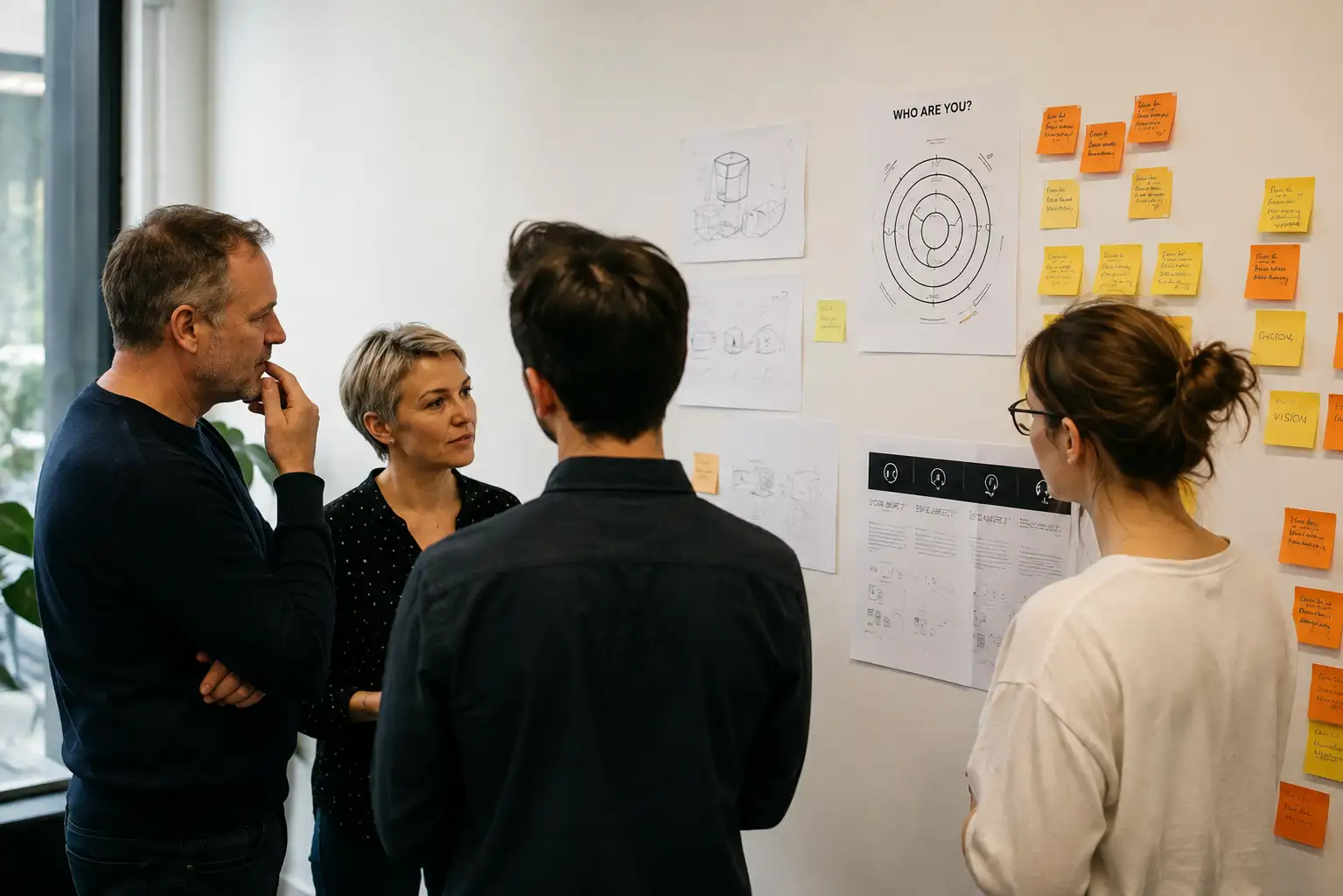
Industrial designers, mechanical engineers, electronics specialists, UX experts, Human Factors specialists, and manufacturing engineers should not work in sequence. They should challenge one another from the very beginning.
The goal isn't simply to build the best prototype.
It's to build the best product.
Final thought
The most successful products rarely look dramatically different from their first prototype.
What changes is everything the customer never sees:
- tolerances
- assembly logic
- manufacturability
- supply resilience
- serviceability
- cost optimization
Beautiful prototypes generate excitement.
Products designed for manufacturing generate businesses.
You may also find interesting

Pilotfish Inc. Earns 2026 D&B SME Elite Award
Pilotfish has been selected as one of Taiwan’s Top 1,000 SMEs in the 2026 Dun & Bradstreet SME Elite Award (鄧白氏中小企業菁英獎), recognising Pilotfish Inc. among a select group of companies demonstrating sustained business performance, international competitiveness, financial soundness and long-term development potential.
.webp)
From Prototype to Production: Why an Integrated Product Development Partner Makes the Difference
Discover why successful hardware products require more than great technology. Learn how an integrated product development approach reduces risk, accelerates time-to-market, and transforms prototypes into scalable, production-ready products.
Why wait months to launch?
From concept to production, we help teams bring products to market faster - without compromising quality or compliance.
What innovators often ask us
This is some text inside of a div block.
Ideally from the earliest concept phase. Involving manufacturing expertise alongside strategy, industrial design, engineering, UX, and Human Factors Engineering helps identify risks early and avoids costly redesign later in development.
This is some text inside of a div block.
Injection molding requires designers to consider draft angles, wall thickness, material flow, cooling behavior, tooling constraints, and potential defects such as sink marks or warpage long before production begins.
This is some text inside of a div block.
Tolerance stack-up occurs when small dimensional variations across multiple components accumulate, causing misalignment or assembly issues even though every individual part is technically within specification.
This is some text inside of a div block.
Because prototypes are designed to demonstrate functionality, while manufacturing requires repeatability, cost efficiency, reliable assembly, supply chain feasibility, and quality control at scale.
This is some text inside of a div block.
Design for Manufacturing is the practice of designing products so they can be manufactured efficiently, consistently, and cost-effectively while maintaining quality and performance.